Birds and buffalo

A very pretty Mourning dove in camp at Satara

Satara is a lovely camp – we all wished for more nights there. What should have been a post-lunch siesta time was spent stalking birds, like this lovely Mourning dove, in front of the rondavels (the round thatched huts typical of Kruger). I wish I managed a better shot of the Green Wood-hoopoes; they were very busy foraging for bugs in gaps in the bark of a tree. The Red-billed buffalo weaver was much more relaxed.

During our late afternoon drive heading north from camp, we came across a huge herd of Cape buffalo. I changed to my wide-angle lens to try and capture a sense of the size of the herd. It probably would have worked better if I could have got out of the car and low down, with one buffalo in the immediate foreground – but I wasn’t going to try that. Buffalo may look a bit like cattle but they aren’t one of the Big Five for nothing! Even this one trying to scratch his head looks a bit dangerous, especially when you look at those horns closely.

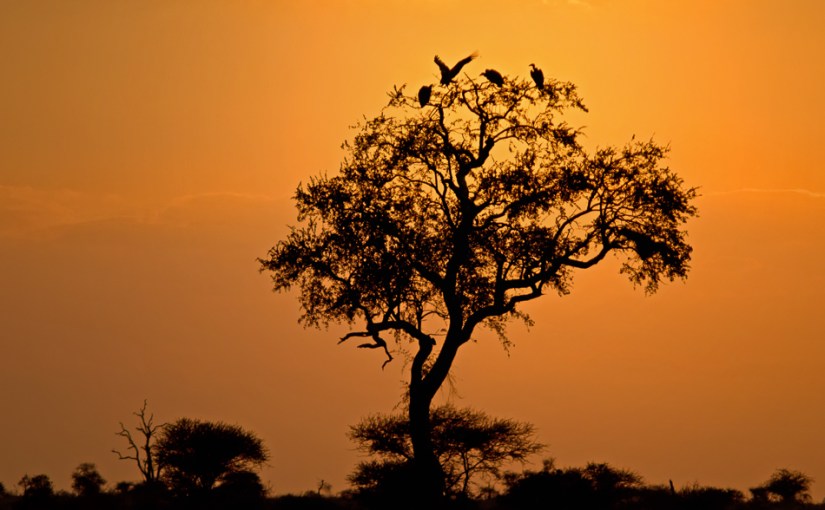
We stayed out as late as we could – as ordinary tourists in Kruger you have to be back in camp when the gates close at sunset. Some vultures hanging about in a tree were intriguing but too far away to see if there was something exciting on the ground attracting their attention. I am glad I managed an African sunset shot – not bad for handheld at 250mm.
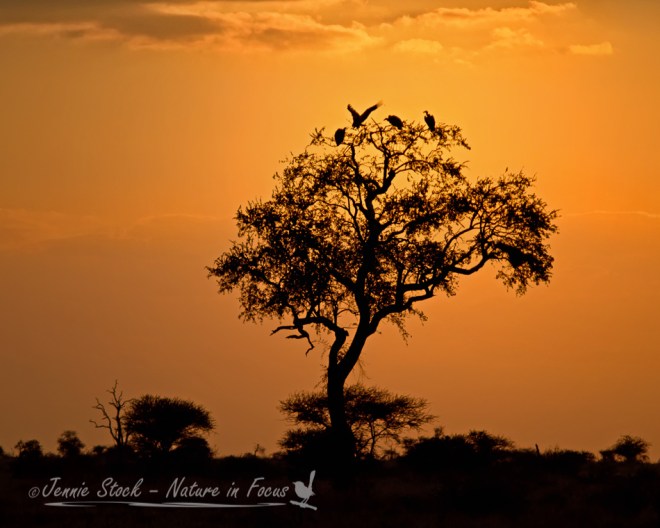
Vultures settling in a tree at sunset

Mountains and mountain passes

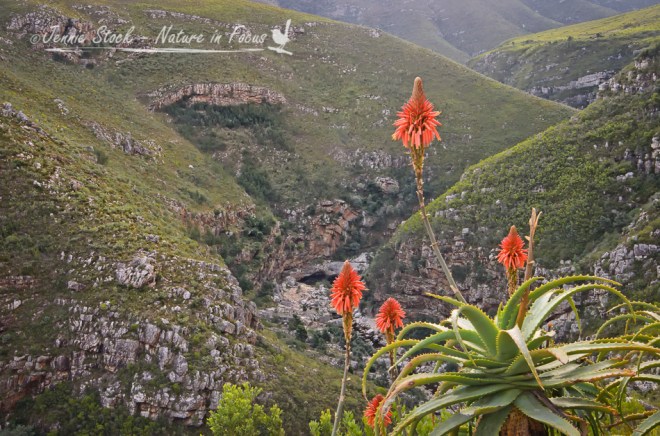
Tradouw Pass with aloes

There are plenty of mountains and mountain passes in the Western Cape. One of the more interesting passes is the Tradouw Pass, which crosses the Langeberg between Swellendam and Barrydale. Completed in 1873, it was built by convict labour under the direction of road engineer Thomas Bain. During rebuilding in the seventies, several lay-byes were built, making it safer to stop and take photographs. Dramatic red aloes were flowering when we visited. The pass cuts through a section of the Cape Fold Mountains, and the folds and twists in the sandstone are clearly visible. These folds and twists are even more obvious when driving our usual route to Montagu through the Kogmanskloof. Great for impromptu geology lessons!

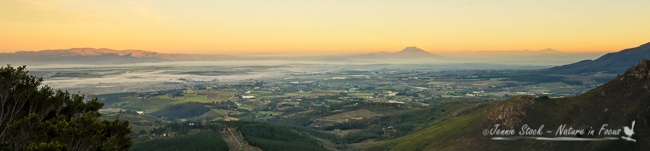
Du Toitskloof is another awesome pass – it used to be part of the major route into Cape Town from the north but these days there is an impressive tunnel through the mountain that takes most of the traffic. We drove over the top using the old pass very early one misty morning on our way to Franschhoek and stopped a couple of times, resulting in these stitched panoramas.

Looking back towards the Hex River mountains from Du Toitskloof
Looking from Du Toitskloof towards the Hex River mountains

Looking south towards Paarl and Wellington from the top of Du Toitskloof

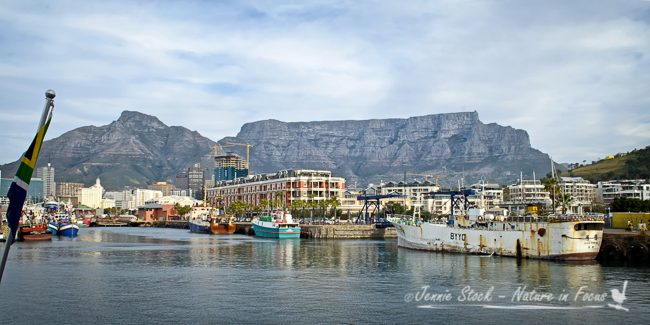
And then we get to the Western Cape’s most iconic mountain – Table Mountain in all her glory, seen from the V&A Waterfront, a combined tourist attraction and working harbour.
Table Mountain and Devil's Peak on the left, from the waterfront.
Table Mountain and Devil’s Peak on the left, from the waterfront.

More Montagu at sunrise

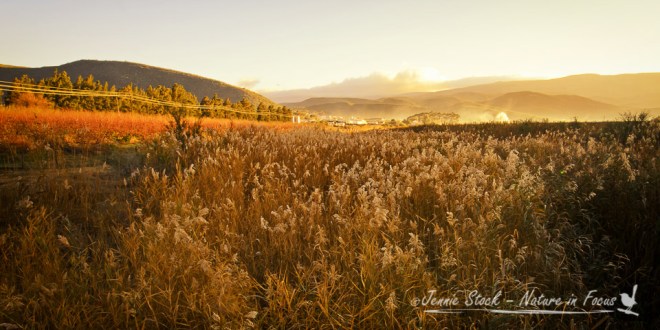
Montagu reed sunrise

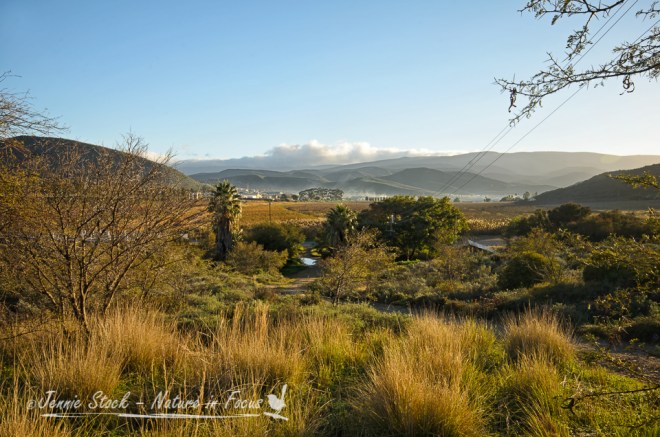
I think I broke a photography rule or two with this Montagu image – I was facing pretty much due north, looking straight toward the sun. But I love the way the reeds are backlit with the golden morning light shining through and how the mist has made the mountains and factories in the background all hazy. This was on the edge of town, standing on the bridge where Route 62 crosses the Kingna River on the way to Barrydale. From here I headed up the hill towards the nature garden and made another image looking in more or less the same direction, just from a different elevation.

Montagu valley view

Montagu vineyards

Langeberg at sunrise

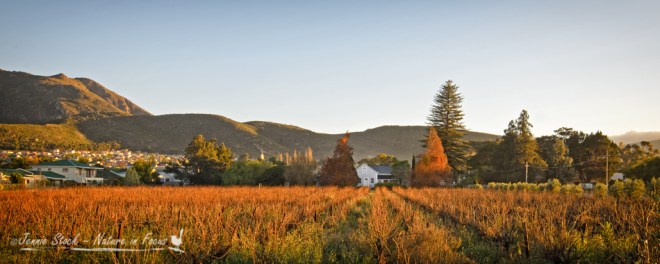
Visiting family in South Africa in July gave me a great opportunity for capturing landscapes, sunrise in particular. As the country only has one time zone, sunrise in the Western Cape in winter is not too early, and I cheated a bit by still being on Perth time. Getting up early wasn’t too much of an effort, even though it was freezing cold (definitely needed gloves for working with a camera and tripod). Montagu, the town my parents now live in, is very scenic and surrounded by some of my favourite things – mountains! The mountain range highlighted by the morning sun in the image above is known as the Langeberg, part of the Cape Fold mountains. Montagu is also well provided with vineyards (great for leading lines) and heritage buildings.

Montagu vineyard at sunrise

Dryandra Woodland Village

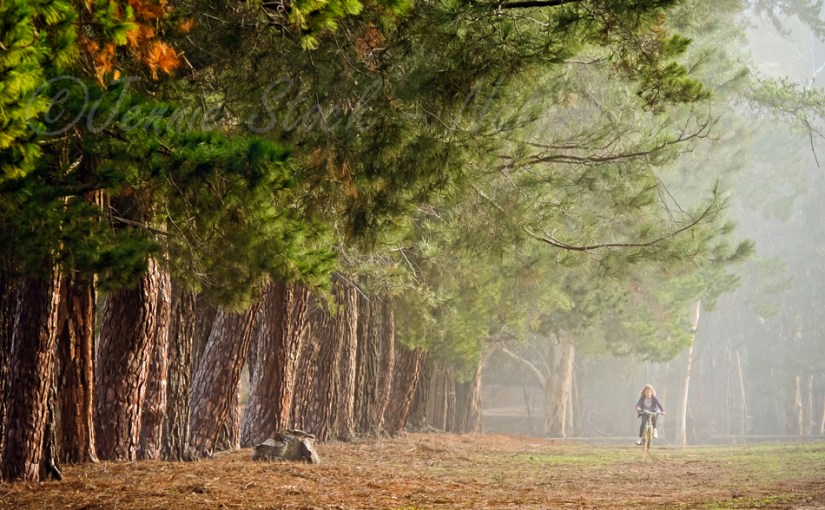
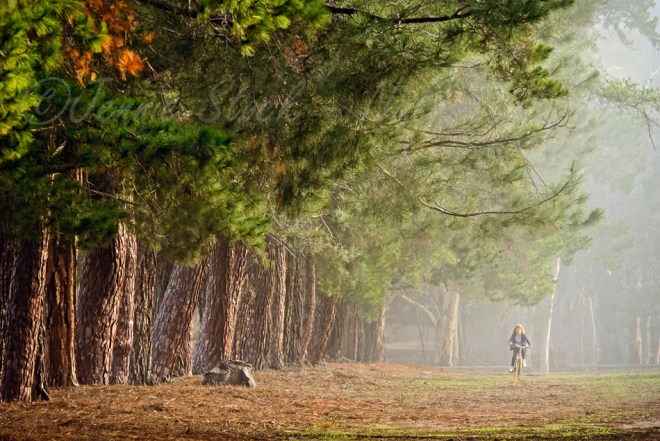
Dryandra misty morning

I thought I’d finish off my Dryandra posts with a few images taken in and around the wonderful Lions Dryandra Village– we’ve stayed here a few times and always been very impressed. The cottages were originally built to house the woodcutters working in the area, so they are lovely old buildings with creaky wooden floors and outside ‘dunnies’. Each cottage has an outside and inside fireplace – a plus for us as my husband loves being able to build a real fire (safely). The caretakers (Lisa and John) are very helpful and a fund of useful information; they do appreciate visitors who respect nature and the tranquility. If the cottages are full there is a DPaW campground at Congelin.

The cottage verandas face west, wonderful for sunset viewing across the paddock populated by Western grey kangaroos, with eucalypt forest in the distance. You don’t really need to move very far to see all sorts of interesting birds, like the very obliging male Red-capped robin shown below. Possums often make a night-time appearance and if you’d like to see more of Western Australia’s nocturnal marsupials the Barna Mia santuary is open some nights. Just dress warmly if you are visiting in winter. An early morning walk near the village should result in some close-up kangaroo sightings. There are plenty of other walks, good for wild flowers in spring and if you are really lucky you might see an echidna or a numbat (I’ve glimpsed a numbat once – would love a photo opportunity!).

Early morning on Rottnest

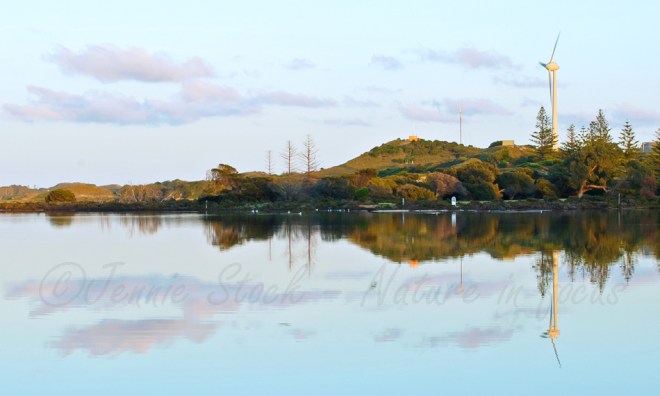
Herschel Lake at sunrise

The first time I stayed over at Rottnest I was there to help with a bird banding project – banding almost always involves early starts. The first morning I rode past the beautiful scenery and shorebirds, wishing I had time to stop with my camera. The second morning I arranged a little bit of time off – I think it was worth it to get such lovely light. My plan is to find a way to spend a whole week over there just taking photos, as the birding and scenery is so wonderful.

Denmark landscapes

One of our main reasons for visiting Denmark in January was to explore options for moving away from Perth some time in the future. Well, Denmark is very high on my list so far. Stunning scenery and a lovely variety – from beautiful inviting protected beaches…

Early morning at Madfish Bay.

…to the awesome power of the Southern Ocean.

Southern Ocean waves

Wilson Inlet provides views of the water in all directions – I think I could handle views like these every day:

This slideshow requires JavaScript.

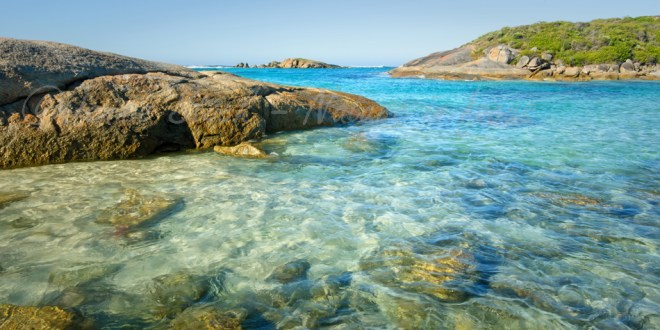
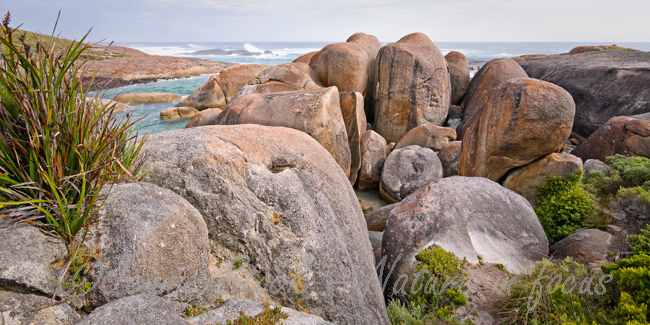
A little further afield and the scenery gets very interesting. These rocks had lots of potential but I think I need to be able to visit them often to do them justice!

Elephant Rocks in William Bay National Park
© Jennie Stock – Nature in Focus, 2013. Unauthorized use and/or duplication of any images or other material without express and written permission from this blog’s author and/or owner is strictly prohibited.