Golden first day in Kruger National Park

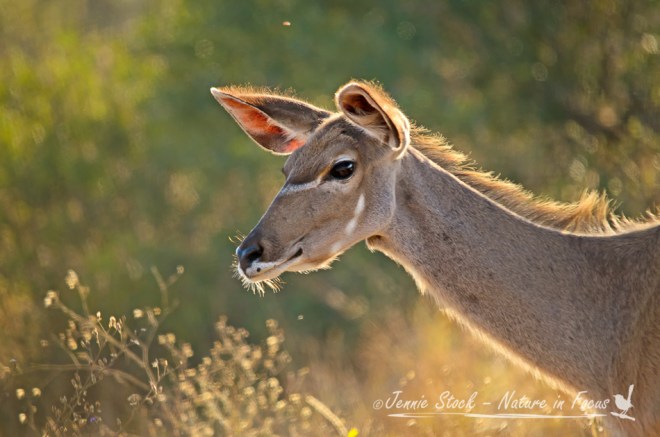
Backlit kudu doe in Kruger

Our main reason for visiting South Africa last year was to celebrate my parents’ golden wedding with a family trip to the Kruger National Park, one of the oldest and largest game reserves in Africa. For my sister and I, it was a chance to share one of our more treasured childhood experiences with our own children. We used to visit the park almost every second winter, but only the eldest of the four grandchildren had been there before this trip.
We stayed in the town of Malelane for one night before heading into the park nice and early in the morning. One of our first good sightings was a small group of Greater Kudu – I love the way the back-lighting emphasises the huge ears of the doe. The young male with her didn’t have the massive horns some of the older males possess, but was still impressively stately. First stop was at the Afsaal picnic site, where we could get up close and personal with Southern Yellow-billed Hornbills and Cape Glossy Starlings while cooking bacon and eggs for breakfast.


As we headed north towards Skukuza, it began to warm up and the sightings slowed. We did get some good views of Klipspringer on a rocky outcrop, as well as seeing a couple of groups of elephants and a Red-crested Korhaan. After stopping in Skukuza for lunch and tyre repairs (one vehicle had a flat on the drive from Johannesburg), we headed towards Tshokwane, another picnic site where you can get out of your vehicle. A very tame female Bushbuck wandered around and we were entertained by one of the staff chasing a baboon out of the kiosk with the aid of a till roll and good aim. Once back in the car, the light began to improve from a photographic standpoint, allowing a lovely portrait of a female Waterbuck.

Birding in Montagu

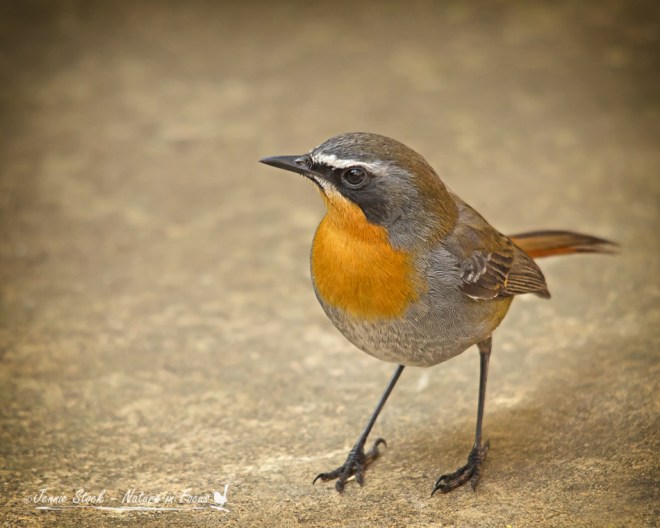
Nana's cheeky robin-chat waiting for his snack.
Nana’s cheeky robin-chat waiting for his snack.

Firstly some apologies for my absence – we’ve been travelling for a few weeks. My original plan was to prepare some posts to publish on the go but things got away from me and it never happened. Maybe next time! And so back to July last year for a look at my favourite birding images from my stay in Montagu. The Cape robin-chat above is very tame and has my parents well trained to produce snacks of cheese on demand. If they are a bit tardy, he wanders into the house to hurry them up!


Birding in my parents’ garden is always rewarding, especially as they have a good supply of bird feeders. Another awesome spot in Montagu is the lei-water dam, used as a roost by egrets, herons and cormorants. It is right in town and has a great hide/platform which gives good access for photography. I could probably spend a whole day there — no-one else in the family can quite see the attraction as it is a bit smelly. My favourite image is the male Cape weaver in breeding plumage hanging from the bottom of his nest, which is built on the end of a thorny branch and suspended over water. Hope the lady weaver approves! We also found more industrious weavers in the nature garden on the other side of town – this time, a Southern masked weaver was busy with the beginnings of his nest. It was fascinating to watch him weave the grass strands in and out.

More Montagu at sunrise

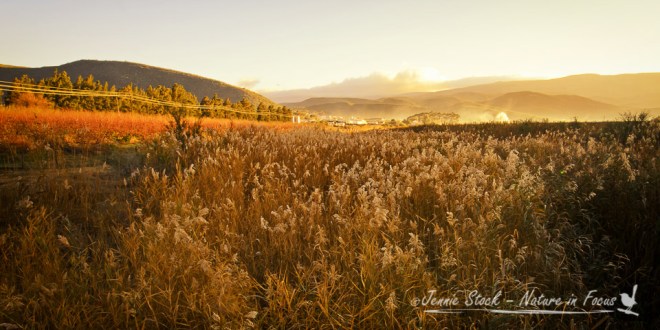
Montagu reed sunrise

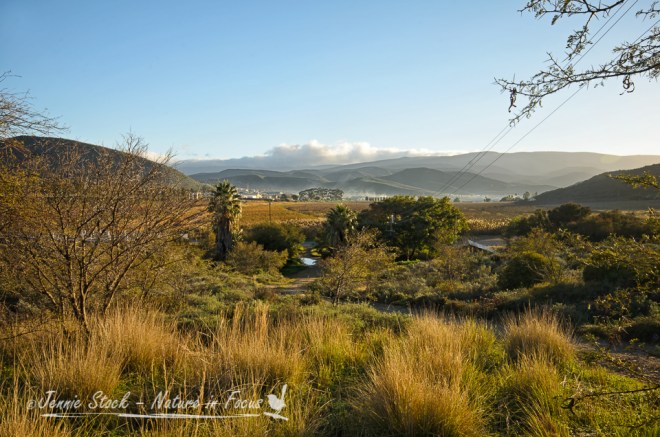
I think I broke a photography rule or two with this Montagu image – I was facing pretty much due north, looking straight toward the sun. But I love the way the reeds are backlit with the golden morning light shining through and how the mist has made the mountains and factories in the background all hazy. This was on the edge of town, standing on the bridge where Route 62 crosses the Kingna River on the way to Barrydale. From here I headed up the hill towards the nature garden and made another image looking in more or less the same direction, just from a different elevation.

Montagu valley view

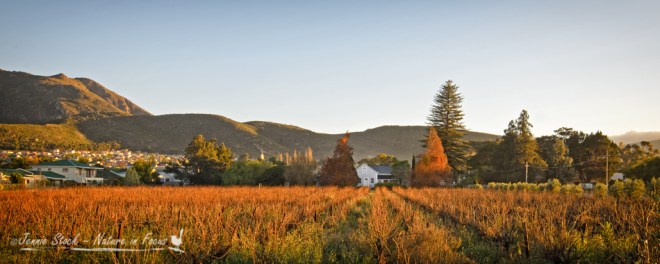
Montagu vineyards

Langeberg at sunrise

Visiting family in South Africa in July gave me a great opportunity for capturing landscapes, sunrise in particular. As the country only has one time zone, sunrise in the Western Cape in winter is not too early, and I cheated a bit by still being on Perth time. Getting up early wasn’t too much of an effort, even though it was freezing cold (definitely needed gloves for working with a camera and tripod). Montagu, the town my parents now live in, is very scenic and surrounded by some of my favourite things – mountains! The mountain range highlighted by the morning sun in the image above is known as the Langeberg, part of the Cape Fold mountains. Montagu is also well provided with vineyards (great for leading lines) and heritage buildings.

Montagu vineyard at sunrise

Dryandra Woodland Village

Dryandra misty morning

I thought I’d finish off my Dryandra posts with a few images taken in and around the wonderful Lions Dryandra Village– we’ve stayed here a few times and always been very impressed. The cottages were originally built to house the woodcutters working in the area, so they are lovely old buildings with creaky wooden floors and outside ‘dunnies’. Each cottage has an outside and inside fireplace – a plus for us as my husband loves being able to build a real fire (safely). The caretakers (Lisa and John) are very helpful and a fund of useful information; they do appreciate visitors who respect nature and the tranquility. If the cottages are full there is a DPaW campground at Congelin.

The cottage verandas face west, wonderful for sunset viewing across the paddock populated by Western grey kangaroos, with eucalypt forest in the distance. You don’t really need to move very far to see all sorts of interesting birds, like the very obliging male Red-capped robin shown below. Possums often make a night-time appearance and if you’d like to see more of Western Australia’s nocturnal marsupials the Barna Mia santuary is open some nights. Just dress warmly if you are visiting in winter. An early morning walk near the village should result in some close-up kangaroo sightings. There are plenty of other walks, good for wild flowers in spring and if you are really lucky you might see an echidna or a numbat (I’ve glimpsed a numbat once – would love a photo opportunity!).

Dryandra birding

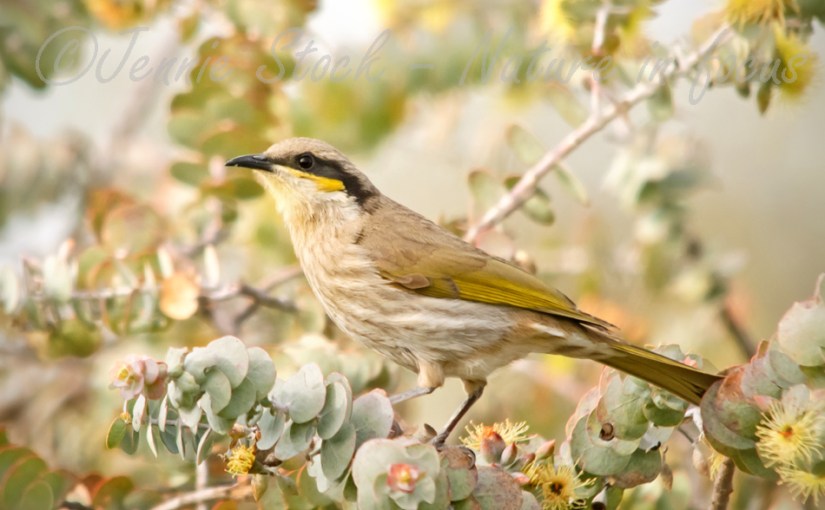
Singing honeyeater on eucalypt ©Jennie Stock – Nature  in focus lg

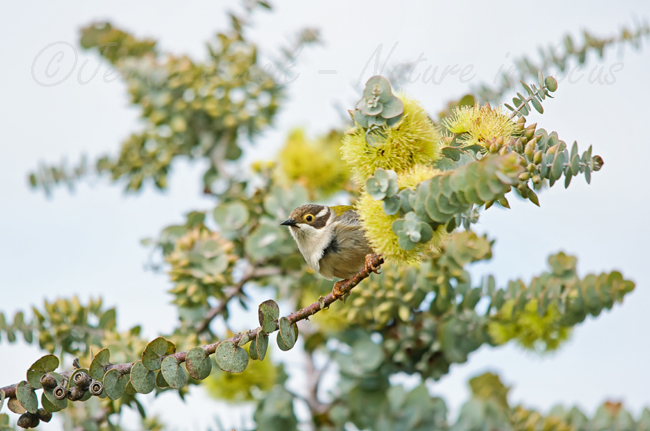
Dryandra and the surrounding area is always good value from a birding point of view, particularly considering the proximity to Perth (about 2 hours driving). From a photography point of view, I appreciate the fact that I can just wander off from the cottages and find plenty to see and photograph. On our last visit, the old arboretum was very productive, as the yellow eucalyptus flowers were attracting several different species of honeyeater. Although the Singing honeyeater is a common species in Perth, it was great to have them feeding at eye-level. I enjoyed seeing and capturing the smaller Brown-headed honeyeaters – they were quite a challenge as they flit about busily.

Brown-headed honeyeater hiding in the eucalypts

An entertaining spectacle was provided by a very fierce Willie Wagtail that seemed to have a kamikaze approach to life; diving and swooping at the much larger Grey Currawong. Currawongs probably do eat nestlings of other birds, so I guess the wagtail could be justified – the strange thing was that only one of the pair of currawongs seemed to attract the Willie wagtail’s ire. Meanwhile, a Ringneck parrot quietly went about feeding in the weeds in the adjacent paddock.

Incoming!
Incoming!


Some of the first bird images I took with my ‘big lens’ (the Sigma 150-500) were taken in Dryandra in July two years ago. I have learnt a lot about photography since then but am still fond of these pictures – partly due to the subjects being such beautiful birds. They were all feeding on another eucalypt species where the flowers had fallen onto the ground and attracted heaps of bees.

© Jennie Stock – Nature in Focus, 2013. Unauthorized use and/or duplication of any images or other material without express and written permission from this blog’s author and/or owner is strictly prohibited.

Spring in Dryandra

It is already starting to feel like spring in Perth – the days are warming up and flowers are appearing everywhere. As I haven’t had much chance to get out with the camera so far this year, I thought I’d travel back to spring in 2012 when we spent a few days at one of my favourite spots in Western Australia. Dryandra Woodland is a nature reserve in the middle of the Wheatbelt, protecting remnant patches of native vegetation. Spring is a great time to visit with many interesting species flowering.

This main image is a bug’s eye view of sundews or Drosera on a gravel path at Dryandra. Sundews are one of the largest groups of carnivorous plant; these particular ones are pretty small.

Field of sundew
Field of sundew

On the other end of the scale are these huge flowers of Eucalyptus macrocarpa or mottlecah. I’m not entirely sure if they are native to the specific area, as they were growing in an arboretum, but the species is endemic to the south-west of WA.

If you look carefully, you might spot the tiny orange spider on the white Pimelea flower below. I didn’t spot it until I got home and saw the image on the computer screen. The image on the right is Red Leschenaultia (Lechenaultia formosa) on one of the less-travelled roads in Dryandra; I love the way it just grows in the middle of the road. The other white flower is another tiny sundew or Drosera. Crawling around on the gravelly roadsides capturing these flowers was rather painful on the knees!

Parts of the reserve are dominated by sheoaks – here pink paper flowers make a very attractive understorey:

Pink flower carpet
Pink flower carpet
© Jennie Stock – Nature in Focus, 2013. Unauthorized use and/or duplication of any images or other material without express and written permission from this blog’s author and/or owner is strictly prohibited.

Early morning on Rottnest

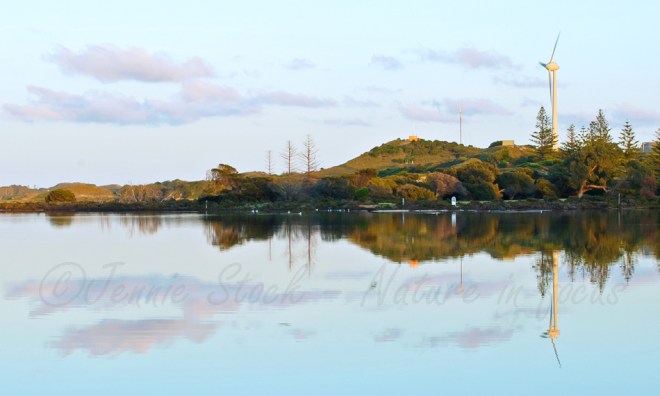
Herschel Lake at sunrise

The first time I stayed over at Rottnest I was there to help with a bird banding project – banding almost always involves early starts. The first morning I rode past the beautiful scenery and shorebirds, wishing I had time to stop with my camera. The second morning I arranged a little bit of time off – I think it was worth it to get such lovely light. My plan is to find a way to spend a whole week over there just taking photos, as the birding and scenery is so wonderful.

Rock parrots on Rottnest

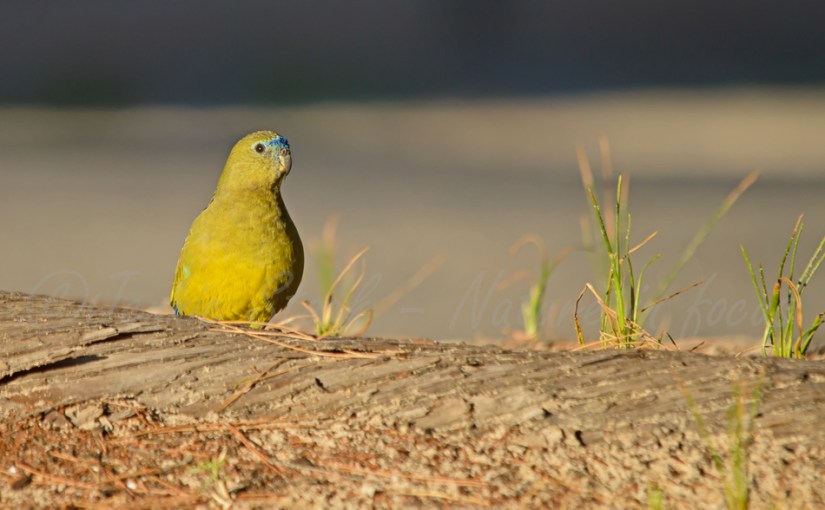
Rock parrot on Rottnest Island

A little while ago I spent a weekend on Rottnest Island trying to get some decent images of these gorgeous little birds. There is a very small population of Rock Parrots (Neophema petrophila) left on the island, although there are more on the mainland. This first image gives a good idea of their small size, with the bird not much bigger than the tufts of grass.

So far, three of the Rottnest birds have been banded (or ringed). The plan is to monitor this group of birds and collect information to help determine the exact population size, whether they are breeding, which parts of the island they use and so on. The researchers wanted some images of banded birds to use for posters asking for sighting information from the public. We managed to find a group of four rock parrots, including the three banded birds, each of which has a metal band on its right leg and a coloured plastic band on the left leg. They were moderately cooperative, allowing me to get some images of them and their bands. They didn’t go so far as to fly into the nets that had been set up in the hope of catching the unbanded bird!


Anyone who visits Rottnest and is lucky enough to spot a banded Rock Parrot, please report date, time, location, number of birds and band colour to boldparkbirdbanding@hotmail.com For more information see http://www.rottnestisland.com/about/flora-fauna/birds

Rottnest Island

Quokka on Rottnest
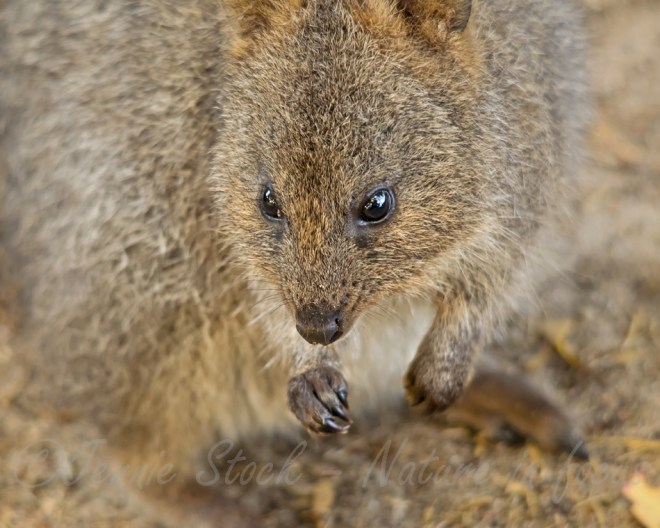
Quokka on Rottnest

This cute little creature is a quokka, a small marsupial familiar to any visitor to Rottnest Island. ‘Rotto’, as it is affectionately known, is a small island off the coast of Perth, Western Australia. Reached by a ferry trip of about 1 hr or by private boat, Rottnest is popular for summer holidays and day trips. There are virtually no cars and most people get around on bicycles. I have found Rottnest to be a great place for photography; as is the case on many islands, the birds and other animals are much less skittish than usual. In fact, the quokkas often get too close!

Rottnest is home to a couple of very attractive feral species – introduced birds that have ‘gone wild’. I think there is now only one peacock left on the island – he did look rather lonely. I saw a group of pheasants as well; I’m fairly sure this one is a young male bird.